Product Details
Overview
The headlight testing equipment is used to detect and adjust the irradiation position of headlights, and judge whether the headlight illumination intensity meets the national standard requirements. It is applicable to halogen headlights, xenon headlights and LED headlights (including LED matrix headlights).
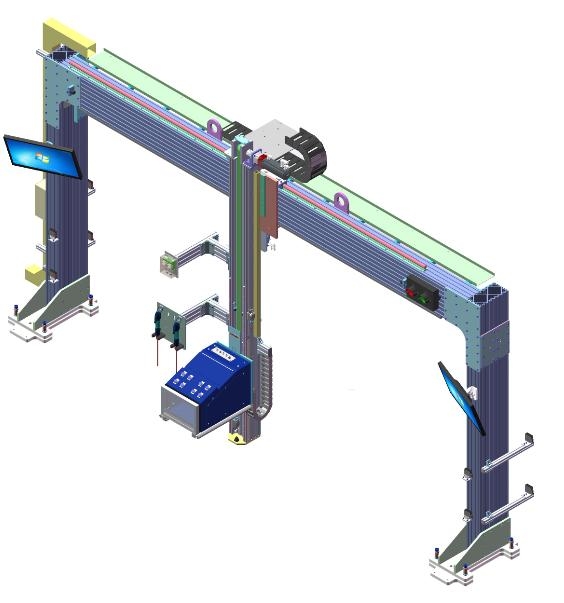
The HLT-2500 series headlight tester is a test equipment designed and manufactured to meet the needs of automobile manufacturers for the offline detection and adjustment of automobile headlights. The tester mainly includes a light-receiving box installed with automatic positioning along the height (Z) direction and lateral (Y) direction. Two sets of servo mechanisms drive the light-receiving box to automatically position to multiple set positions of the headlights. The light-receiving box is equipped with a Fresnel lens, an imaging plate and a camera, which can test the luminous intensity and optical axis offset of the automobile headlights, and can conduct light pattern and light intensity analysis.
Main Functions
• Measurement and adjustment of low beam light beam irradiation position
• Measurement and adjustment of high beam light beam irradiation position
• Measurement of high beam light beam luminous intensity
• Measurement of fog light beam irradiation position
Detection Principle
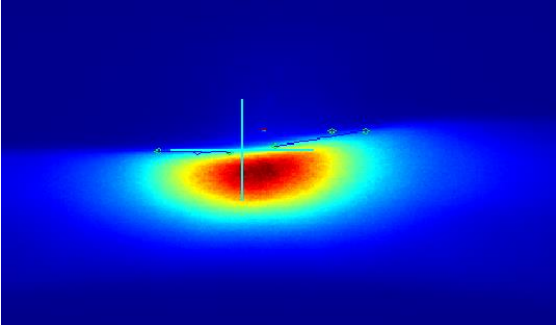
The servo drive mechanism moves the light-receiving box to accurately center it to the high beam, low beam and fog light positions. The digital industrial camera in the light-receiving box can accurately control the exposure parameters and take light pattern pictures. The pictures are transmitted to the measurement industrial computer at a frame rate of 20~40Hz through the GigE protocol for light pattern and light intensity analysis, completing the test of high beam luminous intensity and far/near light position offset.
Test Light Patterns
Halogen lamps, HID xenon lamps, LED lamps (LED light strips and LED lamp groups), LED lens reflector lamps, DLP digital headlights, etc.
ECE European light pattern, SAE American light pattern, JPN Japanese light pattern
It can correspond to the detection of common low beam light distribution such as L-shape and Z-shape.
Measurement Range and Accuracy
Item | Range | Accuracy |
Headlight Luminous Intensity | 0~150,000 cd | ±5% |
Optical Axis Offset | -50cm/10m ~ 50cm/10m | ±2cm/10m |
Light Box Positioning | Y: -1800 ~ 1800 mm; Z: 250 ~ 1400 mm | ±1mm; ±1mm |
Light Box Movement Repeatability Accuracy | - | ±1mm |
Back